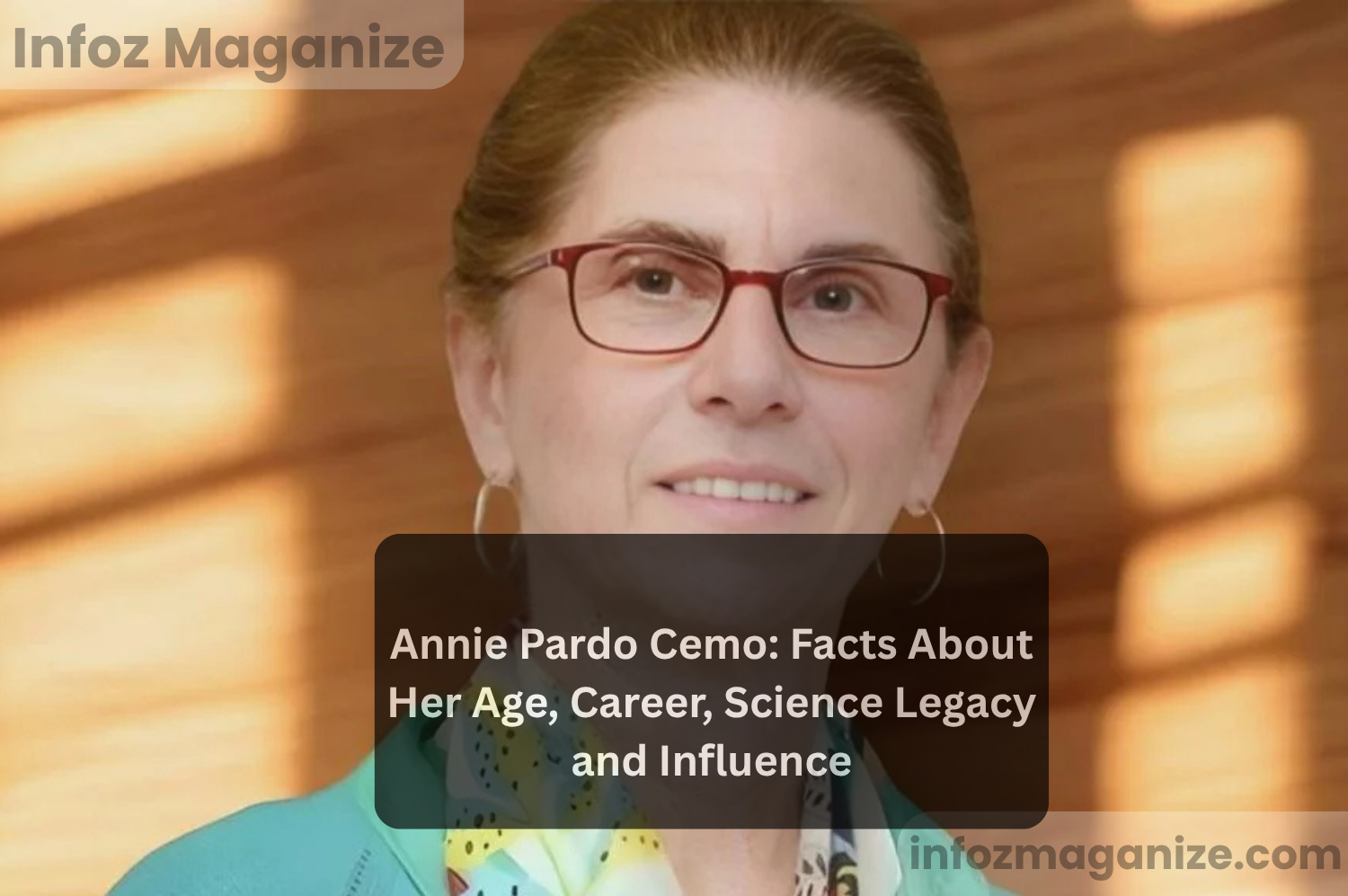

Annie Pardo Cemo is one of Mexico’s most respected cell biologists, known for decades of research into lung disease and for being the mother of Mexican President Claudia Sheinbaum. Her story blends scientific dedication, political history, and family legacy in a way that few academic careers ever do.
This article breaks down her age, education, career milestones, awards, and lasting influence, all in one place, so you get the full picture without digging through scattered sources.
Early Life and Family Background
Annie Pardo Cemo was born on June 6, 1940, in Mexico City. Her family history is rooted in resilience and migration.
- Her parents, Mati Magdalena Semo Calev and Jose Pardo Benjaminoff, were Sephardic Jews from Sofia, Bulgaria.
- Due to the persecution of Jewish communities in Bulgaria during that era, her parents fled to Mandatory Palestine before eventually settling in Mexico.
- She was born shortly after her family arrived in Mexico, making her one of the first generations of her family to grow up in the country.
This background shaped much of her worldview, including her later involvement in activism and her commitment to education as a path forward.
Education and the Making of a Scientist
Long before she became a household name in Mexican science, Annie Pardo Cemo was simply a determined student at a time when academia offered few opportunities for women.
Studies at UNAM
She studied biology at the Faculty of Sciences of the National Autonomous University of Mexico (UNAM), one of the most prestigious universities in Latin America. She later earned her PhD in Biochemical Sciences, also from UNAM, laying the foundation for a research career that would span over five decades.
The 1968 Student Movement and Its Impact
Pardo Cemo was not just a scientist in training; she was also politically active. She and her husband, Carlos Sheinbaum Yoselevitz, participated in the Mexican Movement of 1968, a pivotal moment in the country’s political history.
As a result of her activism, she was expelled from the National Polytechnic Institute (IPN) in 1968. This setback did not derail her academic path; instead, it pushed her further toward UNAM, where she would go on to spend most of her professional life.
A Career Defined by Scientific Impact
Annie Pardo Cemo’s career is best described as long, focused, and deeply influential in the field of pulmonary biology.
Research Focus on Pulmonary Fibrosis
Her main research areas include:
- The extracellular matrix and its role in tissue repair
- Cellular and molecular mechanisms behind lung fibrosing diseases
- Matrix metalloproteinases and their function in chronic degenerative lung conditions
- Idiopathic pulmonary fibrosis (IPF), a serious and often misunderstood lung disease
Her work has directly contributed to a better scientific understanding of how lung tissue scars and deteriorates, insight that has real-world implications for patients, including pandemic survivors dealing with lung damage.
Founding the Biochemistry Research Laboratory
In 1980, she established the Biochemistry Research Laboratory at UNAM. This lab became a hub for experimental research on extracellular matrix dynamics and pulmonary fibrosis, and it helped train generations of Mexican scientists in rigorous, evidence-based methods.
Her academic tenure at UNAM lasted 51 years, until she was granted emeritus status in 2013. Even after retirement from active teaching, she continued mentoring younger researchers and exploring new questions, including aging-related immunological changes in lung tissue, well into her 80s.
By the numbers, her scientific output includes:
| Metric | Detail |
| Years at UNAM | Over 51 years |
| Published research papers | More than 300 peer-reviewed publications |
| Citations | Over 26,000 |
| Research focus | Extracellular matrix, pulmonary fibrosis, matrix metalloproteinases |
Awards, Honors, and Global Recognition
Annie Pardo Cemo’s contributions to science have not gone unnoticed. Some of her most notable honors include:
- National Prize for Arts and Sciences in the science category, recognizing her decades of research
- American Thoracic Society Recognition Award for Scientific Accomplishments (2015), where she became the first non-American woman to receive this honor for her work on lung biopathology and idiopathic pulmonary fibrosis
- Ranking as Mexico’s top molecular biologist in 2025, according to Research.com’s global scientist rankings, based on factors like citation impact and publication influence
- Membership in the Sistema Nacional de Investigadores, Mexico’s national system recognizing top researchers
These accolades reflect not just longevity in her field, but consistent, high-impact contributions that have shaped how pulmonary disease is studied worldwide.
Public Attention and Notable Controversies
While her scientific work is widely respected, Annie Pardo Cemo has also found herself in the public eye for reasons beyond the laboratory.
- 1968 activism and surveillance: Following her involvement in the 1968 student movement, reports have surfaced indicating she was monitored as part of broader government surveillance of activists during that period.
- Panama Papers mention: Her name appeared in the Panama Papers, a major international leak involving companies registered in tax havens. It’s worth noting that appearing in such leaks does not automatically imply wrongdoing, but it did draw media attention given her family’s prominence.
- Increased scrutiny due to her daughter’s political rise: As Claudia Sheinbaum became Mexico’s president, public interest in Annie Pardo Cemo’s life, background, and career grew significantly, placing her personal history under a more intense spotlight than most academics ever experience.
Personal Life Beyond the Laboratory
Outside her scientific achievements, Annie Pardo Cemo’s personal life is closely tied to Mexican political history.
- She married chemical engineer Carlos Sheinbaum Yoselevitz in 1960.
- Together, they had three children: Julio, Claudia, and Adriana.
- Her daughter, Claudia Sheinbaum, became President of Mexico, adding a new layer of public interest to the family’s story.
- Colleagues and family often describe her as stubborn in the best sense, someone who refused to let professional or political setbacks define her.
Her family has often spoken about the sexism she faced early in her career, particularly during a time when academic science in Mexico was heavily male dominated.
Influence in 2026 and Ongoing Legacy
Even now, Annie Pardo Cemo’s influence extends well beyond her formal retirement. Her legacy shows up in a few clear ways:
- Scientific mentorship: Many researchers currently working in Mexican cell biology and pulmonary science trained under her or within labs shaped by her methods.
- Institutional impact: The Biochemistry Research Laboratory she founded continues to operate as part of UNAM’s broader research ecosystem.
- Symbol of persistence: Her career is frequently cited as an example of scientific excellence achieved despite political, social, and gender-based obstacles.
- National pride: Being ranked as Mexico’s leading molecular biologist has renewed public and academic interest in her decades of work, especially among younger scientists.
Her story is often used to illustrate how sustained investment in basic research can produce world-class outcomes over time, something increasingly relevant as Mexico continues developing its scientific infrastructure.
Biography Table
| Category | Details |
| Full Name | Annie Pardo Cemo |
| Date of Birth | June 6, 1940 |
| Birthplace | Mexico City, Mexico |
| Nationality | Mexican |
| Profession | Cell Biologist, Professor Emeritus |
| Education | Biology (UNAM), PhD in Biochemical Sciences (UNAM) |
| Institution | National Autonomous University of Mexico (UNAM) |
| Research Area | Extracellular matrix, pulmonary fibrosis |
| Spouse | Carlos Sheinbaum Yoselevitz |
| Children | Julio, Claudia, and Adriana Sheinbaum |
| Notable Award | American Thoracic Society Recognition Award (2015) |
| Known For | Pulmonary fibrosis research, mother of President Claudia Sheinbaum |
Frequently Asked Questions About Annie Pardo Cemo
How old is Annie Pardo Cemo? She was born on June 6, 1940, making her 85 years old as of mid-2026.
What is Annie Pardo Cemo known for? She is known for her decades of research on pulmonary fibrosis and the extracellular matrix at UNAM.
Is Annie Pardo Cemo related to Claudia Sheinbaum? Yes, she is the mother of Mexico’s President Claudia Sheinbaum.
Where did Annie Pardo Cemo study? She studied biology and earned her PhD in Biochemical Sciences at UNAM.
Did Annie Pardo Cemo receive any major awards? Yes, including the National Prize for Arts and Sciences and the American Thoracic Society Recognition Award.
Was Annie Pardo Cemo involved in political activism? Yes, she participated in the Mexican Movement of 1968 alongside her husband.
How many children does Annie Pardo Cemo have? She has three children: Julio, Claudia, and Adriana.
Final Thoughts
Annie Pardo Cemo’s life tells a story bigger than academic titles or citation counts. It’s a story of resilience, from her family’s escape from persecution to her own fight against gender bias and political repression, all while building a research career that shaped how the world understands lung disease.
Her legacy as a scientist stands on its own merit, and her role as the mother of a sitting president has only brought that legacy into sharper focus for a global audience.
Related Posts
- Claudia Sheinbaum: Career, Political Rise, and Key Achievements
- Top Female Scientists in Mexico Making Global Impact
- Understanding Idiopathic Pulmonary Fibrosis: Causes and Research


 By
By